Pages

Thursday, 4 August 2011

Nylon Fiber | Nylon Fiber Production Process | Characteristics of Nylon Fiber | Uses of Nylon Fiber

Nylon is a manufactured fiber in which the fiber forming substance is a long-chain synthetic polyamide in which less than 85% of the amide-linkages are attached directly (-CO-NH-) to two aliphatic groups.
Nylon is a synthetic polymer, a plastic, invented on February 28, 1935 by Wallace Carothers at the E.I. du Pont de Nemours and Company of Wilmington, Delaware, USA. The material was announced in 1938 and the first nylon products; a nylon bristle toothbrush made with nylon yarn (went on sale on February 24, 1938) and more famously, women’s stockings (went on sale on May 15, 1940). Nylon fibres are now used to make many synthetic fabrics, and solid nylon is used as an engineering material.

Nylon Fiber Production — The term nylon refers to a family of polymers called linear polyamides. There are two common methods of making nylon for fiber applications. In one approach, molecules with an acid (COOH) group on each end are reacted with molecules containing amine (NH2) groups on each end. The resulting nylon is named on the basis of the number of carbon atoms separating the two acid groups and the two amines. Thus nylon 6,6 which is widely used for fibers is made from adipic acid and hexamethylene diamine. The two compounds form a salt, known as nylon salt, an exact 1:1 ratio of acid to base. This salt is then dried and heated under vacuum to eliminate water and form the polymer.

In another approach, a compound containing an amine at one end and an acid at the other is polymerized to form a chain with repeating units of (-NH-[CH2]n-CO-)x. If n=5, the nylon is referred to as nylon 6, another common form of this polymer. The commercial production of nylon 6 begins with caprolactam uses a ring-opening polymerization. For a detailed production flowchart, go here.

In both cases the polyamide is melt spun and drawn after cooling to give the desired properties for each intended use. Production of nylon industrial and carpet fibers begins with an aqueous solution of monomers and proceeds continuously through polymerization, spinning, drawing, or draw-texturing.

Characteristics of Nylon Fiber
  • Exceptionally strong 
  • Elastic 
  • Abrasion resistant 
  • Lustrous 
  • Easy to wash 
  • Resistant to damage from oil and many chemicals 
  • Can be precolored or dyed in wide range of colors 
  • Resilient 
  • Low in moisture absorbency 
  • Filament yarns provide smooth, soft, long-lasting fabrics 
  • Spun yarns lend fabrics light weight and warmth
Some Major Nylon Fiber Uses

Apparel: Blouses, dresses, foundation garments, hosiery, lingerie, underwear, raincoats, ski apparel, windbreakers, swimwear, and cycle wear .

Home Furnishings: Bedspreads, carpets, curtains, upholstery 

Industrial and Other Uses: Tire cord, hoses, conveyer and seat belts, parachutes, racket strings, ropes and nets, sleeping bags, tarpaulins, tents, thread, monofilament fishing line, dental floss.


What is Garments Ribbon | Types of Ribbon | Manufacturing Process of Ribbon | History of Ribbon

Ribbon:
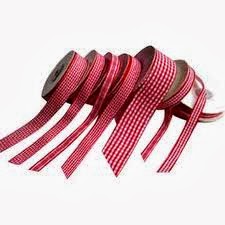
A Ribbon is a long, narrow strip of material used for decoration of clothing or the hair or gift wrapping; An inked strip of material against which type is pressed to print letters in a typewriter or printer; A toolbar that incorporates tabs and menus; to decorate with ribbon.We can also say a Ribbon is a thin band of flexible material, typically cloth but also plastic or sometimes metal, used primarily for binding and tying. Cloth ribbons, which most commonly includes silk, are often used in connection with dress, but also applied for innumerable useful, ornamental and symbolic purposes; cultures around the world use this device in their hair, around the body, or even as ornamentation on animals, buildings, and other areas. Ribbon is also sometimes used as a package sealer, on par with twine.
Garments Ribbon
Types of Ribbon
  1. Grosgrain Ribbon
  2. Satin Ribbon
  3. Velvet Ribbon
  4. Offray Ribbon
  5. lace Ribbon
  6. Turquoise Ribbon
Manufacturing Process of Ribbon
The manufacture of cloth ribbons forms a special department of the textile industries. The essential feature of a ribbon loom is the simultaneous weaving in one loom frame of two or more webs, going up to as many as forty narrow fabrics in modern looms. To effect the conjoined throwing of all the shuttles and the various other movements of the loom, the automatic action of the power-loom is necessary and it is a remarkable fact that the self-acting ribbon loom was known and extensively used more than a century before the famous invention of Cartwright.

History of Ribbon
Ribbon-weaving is known to have been established near St. Etienne (dep. Loire) as early as the 11th century, and that town has remained the headquarters of the industry. During the Huguenot troubles, ribbon-weavers from St. Etienne settled at Basel and there established an industry which in modern times has rivalled that of the original seat of the trade. Crefeld is the centre of the German ribbon industry, the manufacture of black velvet ribbon being there a specialty. In England Coventry is the most important seat of ribbon-making, which is also prosecuted at Norwich and Leicester.

Ribbons are enjoyed by many people as a common decoration. In some cultures birthday gifts are adorned with these colorful strings.

While satin and other sorts of ribbon have always been used in lingerie, the usage of ribbon in the garment industry, while subject to fashion trends, saw an upsurge in the mid to late 90’s. This upsurge led to increased ribbon manufacturing as well as new and improved manufacturing techniques. Due to more competitive production rates, as well as past experience in this field, companies in the Far Eypesast - especially those in China - gradually secured themselves to be the major ribbon suppliers in the world and improved both the quality and the variety of their merchandise to match those of their established European and North American competitors.

Presently, the North American continent remains the largest importer of ribbon and ribbon derivative products (such as bows, rosettes, and other garment accessories made from ribbon). However, due to outsourcing of production of garments by North American garment manufacturers, countries in Asia and South America have started to contribute to the change of the statistical figures of ribbon imports.

Inspired by European silk ribbons obtained through trade, Great Lakes and Prairie Native American tribes created art form of appliqué ribbon work.

Tuesday, 2 August 2011

What is Loom | Define Loom | Shuttle Loom | Shuttle less loom | Modern Loom | Classification of Modern Loom | Projectile Loom | Rapier Loom | Water Jet Loom | Air Jet Loom | Circular Loom

An apparatus for making fabric by weaving yarn or thread. A loom is a device used to weave cloth. The basic purpose of any loom is to hold the warp threads under tension to facilitate the interweaving of the weft threads. The precise shape of the loom and its mechanics may vary, but the basic function is the same.

Shuttle Loom: The shuttle loom is the oldest type of weaving loom which uses a shuttle which contains a bobbin of filling yarn that appears through a hole situated in the side. The shuttle is batted across the loom and during this process, it leaves a trail of the filling at the rate of about 110 to 225 picks per minute (ppm). Although very effective and versatile, the shuttle looms are slow and noisy. Also the shuttle sometimes leads to abrasion on the warp yarns and at other times causes thread breaks. As a result the machine has to be stopped for tying the broken yarns.

Classification of Modern Loom:

Shuttle less loom: Many kinds of shuttle less looms are used for weaving such as Projectile Looms; Rapier Looms; Water Jet Looms; and Air Jet Looms.

Projectile Loom: It is sometimes called missile loom as the picking action is done by a series of small bullet like projectiles which hold the weft yarn and carry it through the shed and then return empty. All the filling yarns are inserted from the same side of the loom. A special tucking device holds the ends of the wefts in place at the edge of the cloth to form the selvage. This loom needs smooth, uniform yarn which is properly sized in order to reduce friction. Projectile loom can produce up to 300 ppm and is less noisier then the shuttle loom.

Rapier Loom: Rapier loom comes in many types. Early models of it use one long rapier device that travels along the width of the loom to carry the weft from one side to the other. Another type of rapier loom has two rapiers, one on each side of the loom. They may be rigid, flexible or telescopic. One rapier feeds the weft halfway through the sheds of warp yarns to the arm on the other side, which reaches in and carries it across the rest of the way. Rapier looms are very efficient and their speed ranges from 200 to 260 ppm. These looms can manufacture a variety of fabrics ranging from muslin fabric to drapery fabrics and even upholstery fabrics.

Water Jet Loom: In it, a pre measured length of weft yarn is carried across the loom by a jet of water. These looms are very fast with speeds up to 600 ppm and very low noise. Also they don’t place much tension on the filling yarn. As the pick is tension less, very high quality of warp yarns are needed for efficient operation. Also, only yarns that are not readily absorbent can be used to make fabrics on water jet looms such as filament yarn of acetate, nylon, polyester, and glass. However, it can produce very high quality fabrics having great appearance and feel.

Air Jet Looms: In the air jet weaving looms, a jet of air is used to propel the weft yarn through the shed at speeds of up to 600 ppm. Uniform weft yarns are needed to make fabrics on this loom. Also heavier yarns are suitable for air jet looms as the lighter fabrics are very difficult to control through shed. However, too heavy yarns also can’t be carried across the loom by air jet. In spite of these limitations, air jet loom can produce a wide variety of fabrics.

Circular Looms: These looms are particularly used for making tubular fabrics rather than flat fabrics. A shuttle device in it circulates the weft in a shed formed around the machine. A circular loom is primarily used for bagging material.


Process Flow Chart for Quality Control System in Apparel Industry | Flow Chart of Quality Control System in Garments Industry

Quality is unusually slippery and difficult to come to grip with. Therefore some might say “Quality is something I know when I see it. To some Quality is difficult to be explained like love or happiness. Once the concept of Quality is understood fundamentally it stops being slippery and becomes something which can hold by its tail.

According to dictionary Quality is: - an essential character: nature, an ingredient or distinguishing attribute: property, a character trait, superiority of kind, degree of grade or excellence. Different people have different views about quality.

Flow Chart for Specification & Quality Parameters

  • The best money can buy
  • Meeting a specification or conformance to specifications.
  • Craftsmanship
  • The degree of excellence that an item possesses.
  • Product with no defect found
  • Absence of variation in its broad sense.
  • Meeting or exceeding customer expectation.

These responses depend on people’s perception of the value of a product or service under consideration
and their explanation of performance, durability, reliability etc. of that product or service.

According to dictionary Quality is: - an essential character: nature, an ingredient or distinguishing
attribute: property, a character trait, superiority of kind, degree of grade or excellence.
Different people have different views about quality.
· The best money can buy
· Meeting a specification or conformance to specifications.
· Craftsmanship
· The degree of excellence that an item possesses.
· Product with no defect found
· Absence of variation in its broad sense.
· Meeting or exceeding customer expectation.
These responses depend on people’s perception of the value of a product or service under consideration
and their explanation of performance, durability, reliability etc. of that product or service.


Quality Control System in Garments Industry | Quality Control System in Apparel Industry | Quality Control System for Knitted Garment Industry

Introduction:
Quality means customer needs is to be satisfied. Failure to maintain an adequate quality standard can therefore be unsuccessful. But maintaining an adequate standard of quality also costs effort. From the first investigation to find out what the potential customer for a new product really wants, through the processes of design, specification, controlled manufacture and sale.

There are a number of factors on which quality fitness of garment industry is based such as - performance, reliability, durability, visual and perceived quality of the garment. Quality needs to be defined in terms of a particular framework of cost.

In the garment industry quality control is practiced right from the initial stage of sourcing raw materials to the stage of final finished garment. For textile and apparel industry product quality is calculated in terms of quality and standard of fibres, yarns, fabric construction, colour fastness, surface designs and the final finished garment products. However quality expectations for export are related to the type of customer segments and the retail outlets.

Objectives:
  1. To maximize the production of goods within the specified tolerances correctly the first time. 
  2. To achieve a satisfactory design of the fabric or garment in relation to the level of choice in design, styles, colours, suitability of components and fitness of product for the market.
Requirements:
The Quality System Requirements are based on the principle of PDCA Cycle.
Process Cycle
  1. Understanding the customers’ quality requirements.
  2. Organizing & training quality control department.
  3. Ensuring proper flow of quality requirements to the QC department.
  4. Ensuring proper flow of quality requirements to the Production Department.
  5. Establishing quality plans, parameters, inspection systems, frequency, sampling techniques, etc..
  6. Inspection, testing, measurements as per plan.
  7. Record deviations
  8. Feed back to Production Department.
  9. Plan for further improvement.
Establishing the Quality Requirements:
The first step for quality control is to understand, establish & accept the customers’ quality requirements. This involves the following steps.
  1. Getting customers specifications regarding the quality
  2. Referring our past performance
  3. Discussing with the Quality Control Department
  4. Discussing with the Production Department
  5. Giving the Feed Back to the customers
  6. Receiving the revised quality requirements from the customers
  7. Accepting the quality parameters
Various Steps of Inspection & Quality Control:
The following levels are discussed at the Garment Making Department assuming that this department is receiving the ready to cut dyed & finished fabrics from the Dyeing & Finishing Department.

Before or Pre-production Inspection
The following parameters & defects are checked prior to cutting.
  1. Shade Matching
  2. Fabric Construction
  3. GSM (grams per square metre)
  4. Whales & courses if required)
  5. Diameter
  6. Dyeing Levelness
  7. Ecological parameters if required
  8. Softness
  9. Shrinkage
  10. Matching of Rib, Collars & Cuffs
  11. Fabric Holes
  12. Vertical & Horizontal Stripes
  13. Knitting defects such as missing loops, sinker lines, etc.
  14. Bowing
  15. Skewing
  16. Yarn defects such as thick & thin places
  17. Dirts & Stains
During Production Inspection
  1. Verify cutting patterns
  2. Cut components measurements
  3. Cutting shapes
  4. Fabric defects
  5. Other specific parameters as required by the customers Rib, Collars & Cuffs matching
  6. Stitching defects
  7. Sewing threads matching
  8. Dirts & Stains
  9. Measurements
  10. Labels
  11. Trims & Accessories
Before Production Inspection
Many of the important parameters of Pre-productions, During productions & Final inspection parameters. This is to ensure that wrong or major defective garments are not packed.

Final Inspection

A. PACKING & ASSORTMENT
  1. Wrong Model
  2. Wrong Quantity
  3. Missing labels & tags
  4. Wrong Size & Colour assortment
  5. Wrong Folding
B. FABRIC DEFECTS
  1. Wrong Shade
  2. Uneven dyeing
  3. Holes
  4. Knitting stripes
  5. Thick & Thin places
  6. Dirt & Stains
  7. Oil stains
  8. Sinker line
  9. Poor softness
  10. Higher Shrinkage
  11. Crease Marks
C. WORKMANSHIP DEFECTS
  1. Open seam
  2. Puckering
  3. Needle holes & marks
  4. Unbalanced sleeve edge
  5. Unbalanced placket
  6. Insecure shoulder stitch
  7. Incorrect side shape
  8. Bottom hem bowing
  9. Uneven neck shape
  10. Cross labels
  11. Broken & Missing stitch
  12. Insecured buttons
  13. Untrimmed threads & fabrics
  14. Poor Ironing
  15. Double stitch
D. GENERAL DEFECTS
  1. Shade variation within the garment parts
  2. Shade variation between the garments
  3. Defective printing
  4. Defective embroidery
  5. Defective buttons
E. MEASUREMENT DEVIATIONS 
Compare the garment measurements against the Customers’ Measurement Charts.
Following are the some of the important garments’ measurement aspects to be considered.
  1. Garment length
  2. Body width
  3. Shoulder length
  4. Arm hole
  5. Arm Opening
  6. Sleeve length
  7. Placket length
  8. Placket width
  9. Neck width
  10. Neck opening
  11. Hemming width
  12. IRib or Collar width
AQL ( Acceptable Quality Level )
A certain proportion of defective will always occur in any manufacturing process. If the percentage does not exceed a certain limit, it will be economical to allow the defective to go through instead of screening the entire lot. This limit is called the “Acceptable Quality Level” ( AQL )

Considering the practical & economic aspects, Sampling Techniques are adopted to Accept or Reject a Lot on the basis of the Samples drawn at Random from the lot. It has been found and accepted that a scientifically designed sampling & inspection plan protects a Manufacturer as well as the Buyer economically.

American Military Standards known as MIL-STD-105A to 105E is accepted world-wide for sampling sizes. It has the following sample size levels. Normally for Garment Industry 105D or 105E are followed.
  1. Special Inspection Levels ( S1, S2, S3 & S4 )
  2. General Inspection Levels ( I, II & III )
  3. It has various AQL levels from 0.040 to 25 for Accepting or Rejecting the lots. Normally for Garment industry, the AQL levels of 2.5, 4.0 and 6.5 are followed.
Ecological Parameters:
Now all the Customers are asking for Ecological Parameters. Now European Buyers are stressing this. Following are main Ecological Parameters to be considered.
  1. pH range
  2. Formaldehyde levels
  3. Extractable heavy metals
  4. Chlorinated phenols ( PCP, TeCP)
  5. Forbidden Amines of MAK III A1& A2 categories
  6. Pesticides
  7. Chlorinated Organic carriers
  8. Biocide finishes
  9. Flame retardant finishes
  10. Colour fastness to Water
  11. Colour fastness to acid & alkali perspiration
  12. Colour fastness to wet & dry rubbing
  13. Colour fastness to saliva
  14. Emission of volatile chemicals
  15. Other specific parameters as required by the customers
 

Process Flow Chart of Yarn Spinning Technology | Working Process Flow Chart of Yarn Spinning Technology


SPINNING

The cotton fiber grows in the seedpod or boll, of the cotton plant. Each fiber is a single elongated cell that is flat, twisted, and ribbon like with a wide inner hollow (lumen).It is composed of about 90 percent cellulose and about 6 percent moisture; the remainder consists of natural impurities. The outer surface of the fiber is covered with a protective wax like coating which gives the fiber a somewhat adhesive quality. After this hydraulic pressing is done and cotton is been tested for the quality control. And then it has been sent for even moisture distribution. After all these processes this bale cotton gone to traders and textile mills receives these bale cotton from traders. As soon as the cotton arrives at the mill after ginning process in large bales weighing about 500 pounds (225 kg) each it is been kept for 24 hours.

1. BLENDING STEPS: Cotton is passed from bales and then to apron. Apron moves cotton to blending apron. Blending apron has sharp spikes the raise cotton until part of it is knocked off by the roll. Some of the cotton stays on apron. The cotton knocked back by roll and continues to chum and blend until picked up again by apron. Another roll strips off cotton that was not knocked back by previous roll. Cotton falls on conveyor belt and is carried to next process. WHY ITвАЩS BEEN DONE?It is necessary so as to obtain uniformity of fiber quality.

2. OPENING STEPS: Lint cotton falls on apron and passes between feeder rolls to beater cylinder. The rapidly whirling beater blades take off small tufts of cotton, knock out trash, and loosen up the mass. The two screen rolls are made of screen material and air is sucked out of them by fan. This draws the cotton from beater and condenses it on the surface of the screen rolls from which it is taken and passed on by the small rolls. Air suction through cotton takes out dirt and trash. Conveyor belt passes cotton to another type of beater. From beater the cotton passes to a conveyor and is carried to (Cotton going through the picker. WHY ITвАЩS BEEN DONE?It is necessary in order to loosen hard lumps of fiber and disentangle them; cleaning is required to remove trash such as dirt, leaves, burrs, and any remaining seeds. Mechanical bale pickers pluck thin, even layers of the matted fibers from each of a predetermined number of bales in turn and deposit them into a opening machine where the fibers are loosened) hopper. The fiber is mixed and passed to an opener. As the mass of fiber passes through the opener, cylinders with protruding fingers open up the limp and free the trash. The kind and number of cylinders or beaters, employed depend upon the type of cotton that is being processed. The commonly used porcupine beater revolves about 1000 revolutions per minute. As the cotton is opened, trash falls through a series of grid bars. When the cotton emerges from the opener, it still contains small tufts with about two-thirds of the trash. It may be conveyed as lap. GBR- Here the cottons are fed for homogenous mixtures and for removing dirts.MPM-8 вАУ it has got 8 chambers. Generally used for homogenous mixture of fibers like while harvesting some cotton are from matured plants and some are not. So that it will affect the fabric. So, after homogeneous mixing all will be the same.

3. CARDING PROCESS: Before the raw stock can be made into yarn, the remaining impurities must be removed, the fibers must be disentangles, and they must be straightened. The straightening process puts the fibers into somewhat parallel CARDING. The work is done by carding machine. The lap is passed through a beater section and drawn o rapidly revolving cylinder covered with very fine hooks or wire brushes slowly moves concentrically above this cylinder. As the cylinder rotates, the cotton is pulled by the cylinder through the small gap under the brushes; the teasing action removes the remaining trashes, disentangles the fibers , and arranges them in a relatively parallel manner in form of a thin web. This web is drawn through a funnel shaped device that molds it into a round rope like mass called card sliver. Card sliver produces carded yarns or carded cottons serviceable for inexpensive cotton fabrics.

STEPS: The lap from pucker unrolls and feed roll passes cotton licker in roll (covered with saw toothed wire).The licker in roll passes fiber against cleaner bars and gives it up to large cylinder which passes between the thousands of fine wires on surface of cylinder and on flats. The cotton follows large cylinder to doffer cylinder, which remove lint from large cylinder. The doffer comb vibrates against doffer cylinder and takes lint off in a filmy web that passes through condenser rolls, coiler head, and then into can. The sliver may be passed from one can to combing for further removal of foreign matter and parallelization of fiber or directly to drawing. 


4. DOUBLING PROCESS: After carding, several slivers are combined. This results in a relatively narrow lap of compactly placed staple fibers. The compactness of these fibers permits this cotton stock to be attenuated, or drawn out, to a sliver of smaller diameter without falling apart.


5. COMBING PROCESS: When the fiber is intended for fine yarns, the sliver is put through an additional straightening called COMBING. In this operation, fine-toothed combs continue straightening the fibers until they are arranged with such a high degree of parallelism that the short fibers, called noils, are combed out and completely separated out from the longer fibers. The combing process forms a comb sliver made of the longest fibers, which, in turn, produces a smoother and more even yarn. This operation as much as 25% of the original card sliver; thus almost one fourth of the raw cotton becomes waste. The combing process, therefore, is identified with consumer goods of better quality. Since long-staple yarns produce stronger, smoother, and more serviceable fabrics, quality cotton goods carry labels indicating that they are made from combed yarns or combed yarns.

6. DRAWING PROCESS: The combining of several fibers for the drawing, or drafting, process eliminates irregularities that would cause too much variation if the slivers were pulling through singly. The draw frame has several pairs of rollers, each advanced set of which revolves at a progressively faster speed. This action pulls the staple lengthwise over each other, thereby producing longer and thinner slivers. After several stages of drawing out, the condensed sliver is taken to the slubber, where rollers similar to those in the drawing frame draw out the cotton further. Here the slubbing is passed to the spindles, where it is given its first twist and is then wound on bobbins. STEPS: Her six cans that were filled at cards feed each drawing from delivery. The spoons are connected so that if any one of the six slivers from can should break, the machine automatically stops. This prevents making uneven yarn later. Each of four set of rolls runs successively faster than preceding set. The last set runs approximately six times as the first set; consequently, sliver coming out is the same size as each one of six going in. but is attenuated to six times the length per minute. The sliver is neatly coiled again in roving can by coiler head. The sliver is now much more uniform and fibers much more nearly parallel. The sliver is now ready for roving frames.

8. SPINNING PROCESS: The roving, on bobbins, is placed in the spinning frame, where it passes through several sets of rollers running at successively higher rates of speed and is finally drawn out to yarn of the size desired. Spinning machines are of two types; ring frame and mule frame. The ring frame is faster process, but produces a relatively coarse yarn. for very fine yarns, such as worsted, the mule frame is required because of its slow, intermittent operation. The ring frame, which is general in use, is more suitable for the manufacture of cotton yarns in mass production. Its hundreds of spindles, whirling thousands of revolutions per minute, and its constant spinning action provide a fast operation. The ring spinning frame completes the manufacture of yarn (1) by drawing out the roving (2) by inserting twist, and (3) by winding the yarn on bobbins-all in one operation. The bobbins of yarn are removed for such processing as may be desired; for example, the yarn may be reeled into skeins for bleaching or may be wound on cheeses, or spools, for ultimate weaving. STEPS: The principle of spinning is same as that used in roving except that the operation is more refined and a ring and traveler are used instead of the flyer. From bobbin roving is fed between set of drafting rolls to draw strand down to its final desired size. The spindle turns bobbin at a constant speed. The front set of rolls is adjusted to deliver yarn at a speed sufficient to insert desired mount of twist as strand moves along. The traveler glides freely around ring. The tension caused by drag of traveler causes yarn to wind on bobbin at same rate of speed as it delivered by rolls.


Monday, 1 August 2011

Button | What is Button | Define Button | Button Definition | Button Meaning | History of Buttons | Button History | Types of Buttons | Button Types | Button Sizes | Size of the Button | Button Holes | What are Button Holes

Button
A button fastening device with circuit actuating capability includes: a first button part; a second button part engageable releasably with the first button part for fastening articles together; and a circuit actuating unit mounted on at least one of the first and second button parts, adapted to be electrically connected to a circuit, and operable to control circuit states of the circuit through engagement and disengagement of the first and second button parts.
Button
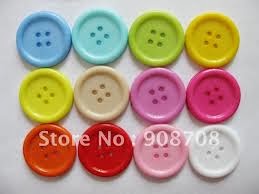
A small disk or knob sewn on to a garment, either to fasten it by being pushed through a slit made for the purpose, or for decoration. In clothing and fashion design, a button is a small disc, typically round, object usually attached to an article of clothing in order to secure an opening, or for ornamentation. Functional buttons work by slipping the button through a fabric or thread loop, or by sliding the button through a reinforced slit called a buttonhole.

Buttons may be manufactured from an extremely wide range of materials, including natural materials such as antler, bone, horn, ivory, shell, vegetable ivory, and wood; or synthetics such as celluloid, glass, metal, bakelite and plastic.

Hard plastic is by far the most common material for newly manufactured buttons; the other materials tend to occur only in premium apparel.

History of Buttons | Button History

Buttons and button-like objects used as ornaments rather than fasteners have been discovered in the Indus Valley Civilization as well as Bronze Age sites in China (circa 2000-1500 BCE), and Ancient Rome.

Buttons made from seashell were used in the Indus Valley Civilization for ornamental purposes by 2000 BC. Some buttons were carved into geometric shapes and had holes pierced into them so that they could attached to clothing by using a thread.

Functional buttons, made from stone, have been found at the site of Gobekli Tepe, in southeastern Turkey, dated at 10,500 B.C. Functional buttons with buttonholes for fastening or closing clothing appeared first in Germany in the 13th century. They soon became widespread with the rise of snug-fitting garments in 13th- and 14th-century Europe.

Types of Buttons | Button Types

Shank Buttons
Shank Buttons have a small ring or a bar with a hole called the shank protruding from the back of the button, through which thread is sewn to attach the button.

Covered Buttons
Covered Buttons are fabric-covered forms with a separate back piece that secures the fabric over the knob.

Flat or Sew-through Buttons
Flat or sew-through buttons have two or four holes punched through the button through which the thread is sewn to attach the button. Flat buttons may be attached by sewing machine rather than by hand, and may be used with heavy fabrics by working a thread shank to extend the height of the button above the fabric.

Worked or Cloth
ButtonsWorked or Cloth Buttons are created by embroidering or crocheting tight stitches (usually with linen thread) over a knob or ring called a form.

Mandarin Buttons

Mandarin buttons or Frogs are knobs made of intricately knotted strings. Mandarin buttons are a key element in Mandarin dress, where they are closed with loops. Pairs of mandarin buttons worn as cuff links are called silk knots.

Button Sizes | Size of the Button
The size of the button depends on its use. Shirt buttons are generally small, and spaced close together, whereas coat buttons are larger and spaced further apart. Buttons are commonly measured in lignes (also called lines and abbreviated L), with 40 lignes equal to 1 inch. For example, some standard sizes of buttons are 16 lignes (10.16 mm, standard button of men’s shirts) and 32 lignes (20.32 mm, typical button on suit jackets).

Button Holes | What are Button Holes
Functional buttons (as opposed to decorative buttons) are normally paired with a buttonhole. Alternately, a decorative loop of cloth or rope may replace the buttonhole. Buttonholes may be either made by hand sewing or automated by a sewing machine.

Buttonholes often have a bar at either end. The bar is a perpendicular stitch that reinforces the ends of a buttonhole.