Pages

Showing posts with label Accessories. Show all posts

Thursday, 4 August 2011

What is Garments Ribbon | Types of Ribbon | Manufacturing Process of Ribbon | History of Ribbon

Ribbon:
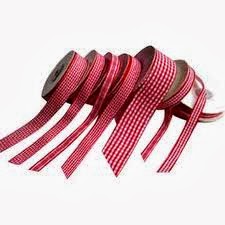
A Ribbon is a long, narrow strip of material used for decoration of clothing or the hair or gift wrapping; An inked strip of material against which type is pressed to print letters in a typewriter or printer; A toolbar that incorporates tabs and menus; to decorate with ribbon.We can also say a Ribbon is a thin band of flexible material, typically cloth but also plastic or sometimes metal, used primarily for binding and tying. Cloth ribbons, which most commonly includes silk, are often used in connection with dress, but also applied for innumerable useful, ornamental and symbolic purposes; cultures around the world use this device in their hair, around the body, or even as ornamentation on animals, buildings, and other areas. Ribbon is also sometimes used as a package sealer, on par with twine.
Garments Ribbon
Types of Ribbon
  1. Grosgrain Ribbon
  2. Satin Ribbon
  3. Velvet Ribbon
  4. Offray Ribbon
  5. lace Ribbon
  6. Turquoise Ribbon
Manufacturing Process of Ribbon
The manufacture of cloth ribbons forms a special department of the textile industries. The essential feature of a ribbon loom is the simultaneous weaving in one loom frame of two or more webs, going up to as many as forty narrow fabrics in modern looms. To effect the conjoined throwing of all the shuttles and the various other movements of the loom, the automatic action of the power-loom is necessary and it is a remarkable fact that the self-acting ribbon loom was known and extensively used more than a century before the famous invention of Cartwright.

History of Ribbon
Ribbon-weaving is known to have been established near St. Etienne (dep. Loire) as early as the 11th century, and that town has remained the headquarters of the industry. During the Huguenot troubles, ribbon-weavers from St. Etienne settled at Basel and there established an industry which in modern times has rivalled that of the original seat of the trade. Crefeld is the centre of the German ribbon industry, the manufacture of black velvet ribbon being there a specialty. In England Coventry is the most important seat of ribbon-making, which is also prosecuted at Norwich and Leicester.

Ribbons are enjoyed by many people as a common decoration. In some cultures birthday gifts are adorned with these colorful strings.

While satin and other sorts of ribbon have always been used in lingerie, the usage of ribbon in the garment industry, while subject to fashion trends, saw an upsurge in the mid to late 90’s. This upsurge led to increased ribbon manufacturing as well as new and improved manufacturing techniques. Due to more competitive production rates, as well as past experience in this field, companies in the Far Eypesast - especially those in China - gradually secured themselves to be the major ribbon suppliers in the world and improved both the quality and the variety of their merchandise to match those of their established European and North American competitors.

Presently, the North American continent remains the largest importer of ribbon and ribbon derivative products (such as bows, rosettes, and other garment accessories made from ribbon). However, due to outsourcing of production of garments by North American garment manufacturers, countries in Asia and South America have started to contribute to the change of the statistical figures of ribbon imports.

Inspired by European silk ribbons obtained through trade, Great Lakes and Prairie Native American tribes created art form of appliqué ribbon work.
Monday, 1 August 2011

Button | What is Button | Define Button | Button Definition | Button Meaning | History of Buttons | Button History | Types of Buttons | Button Types | Button Sizes | Size of the Button | Button Holes | What are Button Holes

Button
A button fastening device with circuit actuating capability includes: a first button part; a second button part engageable releasably with the first button part for fastening articles together; and a circuit actuating unit mounted on at least one of the first and second button parts, adapted to be electrically connected to a circuit, and operable to control circuit states of the circuit through engagement and disengagement of the first and second button parts.
Button
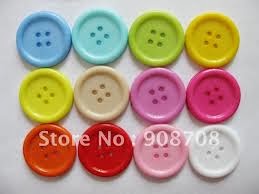
A small disk or knob sewn on to a garment, either to fasten it by being pushed through a slit made for the purpose, or for decoration. In clothing and fashion design, a button is a small disc, typically round, object usually attached to an article of clothing in order to secure an opening, or for ornamentation. Functional buttons work by slipping the button through a fabric or thread loop, or by sliding the button through a reinforced slit called a buttonhole.

Buttons may be manufactured from an extremely wide range of materials, including natural materials such as antler, bone, horn, ivory, shell, vegetable ivory, and wood; or synthetics such as celluloid, glass, metal, bakelite and plastic.

Hard plastic is by far the most common material for newly manufactured buttons; the other materials tend to occur only in premium apparel.

History of Buttons | Button History

Buttons and button-like objects used as ornaments rather than fasteners have been discovered in the Indus Valley Civilization as well as Bronze Age sites in China (circa 2000-1500 BCE), and Ancient Rome.

Buttons made from seashell were used in the Indus Valley Civilization for ornamental purposes by 2000 BC. Some buttons were carved into geometric shapes and had holes pierced into them so that they could attached to clothing by using a thread.

Functional buttons, made from stone, have been found at the site of Gobekli Tepe, in southeastern Turkey, dated at 10,500 B.C. Functional buttons with buttonholes for fastening or closing clothing appeared first in Germany in the 13th century. They soon became widespread with the rise of snug-fitting garments in 13th- and 14th-century Europe.

Types of Buttons | Button Types

Shank Buttons
Shank Buttons have a small ring or a bar with a hole called the shank protruding from the back of the button, through which thread is sewn to attach the button.

Covered Buttons
Covered Buttons are fabric-covered forms with a separate back piece that secures the fabric over the knob.

Flat or Sew-through Buttons
Flat or sew-through buttons have two or four holes punched through the button through which the thread is sewn to attach the button. Flat buttons may be attached by sewing machine rather than by hand, and may be used with heavy fabrics by working a thread shank to extend the height of the button above the fabric.

Worked or Cloth
ButtonsWorked or Cloth Buttons are created by embroidering or crocheting tight stitches (usually with linen thread) over a knob or ring called a form.

Mandarin Buttons

Mandarin buttons or Frogs are knobs made of intricately knotted strings. Mandarin buttons are a key element in Mandarin dress, where they are closed with loops. Pairs of mandarin buttons worn as cuff links are called silk knots.

Button Sizes | Size of the Button
The size of the button depends on its use. Shirt buttons are generally small, and spaced close together, whereas coat buttons are larger and spaced further apart. Buttons are commonly measured in lignes (also called lines and abbreviated L), with 40 lignes equal to 1 inch. For example, some standard sizes of buttons are 16 lignes (10.16 mm, standard button of men’s shirts) and 32 lignes (20.32 mm, typical button on suit jackets).

Button Holes | What are Button Holes
Functional buttons (as opposed to decorative buttons) are normally paired with a buttonhole. Alternately, a decorative loop of cloth or rope may replace the buttonhole. Buttonholes may be either made by hand sewing or automated by a sewing machine.

Buttonholes often have a bar at either end. The bar is a perpendicular stitch that reinforces the ends of a buttonhole.

Thursday, 28 July 2011

Garments Trimmings | Garments Accessories | Marker | Interlining | Garment Pattern | Fabric Spreading | Lining

Garments Trimmings:
Those accessories which are used in sewing section are called trimmings.
Garments Trimmings
Garments Accessories:
Fabric is the basic material in garment manufacturing. Except fabric, the other materials are known as accessories. For shirt making there are some accessories are commonly used.

List of Garment Accessories:
  1. Thread
  2. Zipper
  3. Interlining
  4. Button for example: Snap button, Plastic button, .Metal button.
  5. Label: Main label , Size Label, Wash care label
  6. Motif: Leather, Plastic, batchMetal
  7. Pocketing fabric
  8. Lining
  9. Velcro
  10. Elastic
  11. Cord
  12. Ribbon
  13. Toggles
  14. Rivet
  15. Collar bone.
Finishing Accessories:
There are some finishing accessories:
  1. Hang tag
  2. Price tag
  3. Plastic/ poly bag
  4. Tissue paper
  5. Carton
  6. Scotch tape
  7. PP belt
  8. Tag pin
  9. Plastic clip
  10. Stiker
  11. Butterfly
  12. Collar insert
  13. Back board
  14. Necks insert
Button:
In clothing and fashion design, a button is a small disc, typically round, object usually attached to an article of clothing in order to secure an opening, or for ornamentation. Functional buttons work by slipping the button through a fabric or thread loop, or by sliding the button through a reinforced slit called a buttonhole.

Buttons may be manufactured from an extremely wide range of materials, including natural materials such as antler, bone, horn, ivory, shell, vegetable ivory, and wood; or synthetics such as celluloid, glass, metal, bakelite and plastic.

Hard plastic is by far the most common material for newly manufactured buttons; the other materials tend to occur only in premium apparel.

Zipper:
A zipper or zip fastener) is a popular device for temporarily joining two edges of fabric. It is used in clothing (e.g. jackets and jeans), luggage and other bags, sporting goods, camping gear (e.g., tents and sleeping bags), and other daily use items.

Interlining:
Interlining is a layer of flannel fabric sewn in between the face fabric and the standard lining. Interlining provides insulation and also adds a luxurious weight and softness, improves the drape of the fabric, and protects fragile fabrics. It is a popular choice with silk draperies.Depending on the application, interlining materials can be woven, knitted, or created by fusing fibers together. Silk, wool, and artificial fibers with good insulating qualities are common choices for interlining.

Garment Pattern:
The individual par of a garment which is shaped by hard paper is called pattern.

Working Pattern:
The patterns set which is used for sample making are called Working Pattern.

Marker:
Marker is a large thin paper which contains shape of required pattern pieces or a particular style of garments.

Fabric Spreading:

Spreading means smooth lying out of fabrics as per marker length and width.

Fabric Cutting:
Cutting is the process by which we can cut fabrics as per marker dimension with the help of knife.

Bespoke Garments:
Bespoke Garments are made on the basis of individual clients and according to the individual’s size and requirement.

Ready to Wear Garments:
Ready to wear garments is made on the basis of target common groups, according to size charts, derived from statistical analysis.

Lining:
Lining is one kind of trimmings which is used underside of garments and use in next to skin.

Tuesday, 26 July 2011

Sewing Thread Winding System | Different Types Winding | Precision winding | Parallel winding

A transformer winding in which all the turns are arranged on a bobbin instead of in the form of a disk. Generally used for the high-voltage windings of small transformers.

Different types of Sewing Thread winding system

Precision winding: 

• Constant winding ratio
• Winding angle reduces with increasing diameter
• No pattern areas
• Good off-winding characteristics
• High package density

Step precision or digicone winding:

• Almost constant winding angle
• The wind ratio is reduced in steps
• Combines the advantage of random and precision winding
• No pattern areas
• Higher consistent package density
• Perfect unwinding characteristics
• Straight sided packages

Random winding: 

• Winding angle is kept constant since the winding ratio reduces with increasing diameter
• Stable packages
• Even density

Pineapple winding:

• Winding traverse reduces to produce packages with tapered edges
• Required for filament winding operations
• All three types of winding applicable

Parallel winding:

• Very high package density
• Thread vertical to package axis
• Relatively short lengths of thread
• Suitable for side unwinding
• No pattern areas 5,6

Ball winding:

• Very easy unwinding 
• Winding takes place in 4 stages:
1. Rough base winding
2. Form winding
3. Surface layer winding
4. Circumferencial winding

Skein winding:

• Easy unwinding
• Very small parallel strand of soft twisted thread.


Uses of Sewing Threads, Embroidery Thread | Necessities of Sewing Threads


Sewing thread is a flexible, small diameter yarn or strand usually treated with a surface coating, lubricant or both, intended to be used to stitch one or more pieces of material or an object to a material. It may be defined as smooth, evenly spun, hard-twisted ply yarn, treated by a special finishingprocess to make it resistant to stresses in its passage through the eye of a needle and through material involved in seaming and stitching operations.

Applications of sewing threads

Approximately 80% of all sewing threads produced are used by the clothing industries. sewing, embroidery, applique and serging thread that needlecraft hobbyists and professionals need. We carry product lines from Aurifil, Floriani, Gutermann, Isacord, Mettler, Presencia, Robison Anton, Signature, Superior, Wonderfil, YLI, and more. We also carry the entire line of Floriani Embroidery Stabilizers, and a wide selection of quilting patterns and sewing notions.

Importance of Sewing Threads

The sewing thread is of considerable importance, playing a major role in retaining the fabric appearance, look, and life of the garment in the long run, even though it usually represents much less than 1% by mass of a garment. 

Nowadays, a numerous variety of sewing threads are available in the market due to diverse demands from the sewing industry, increasing use of different types of fibres in the garment industry and expanding application of textile materials in various fields like apparels, technical applications as well. Better understanding of the sewing process and its requirements as obtained through studies by modern instrumentation techniques has also greatly contributed to the development of new threads. It is also very much required and appreciable to have different types of sewing threads, which can suit various applications, since various end-uses demand specific property requirements.

It is beyond anybody’s doubt that the success of garment manufacturing process mainly depends upon the operation of sewing, though a very better quality of fabric is selected for the garment manufacturing process. Again, the sewing threads play a vital role in the success of sewing operation, since a wrong thread may ruin a very high quality fabric and even a best sewing machine used for the sewing, and the whole process will fail. It can add to waste of both time and money. Hence, it is very much imperative to select a right type of sewing thread which can suit one’s requirements exactly. This is possible by the correct understanding of the type of fibre used to manufacture, manufacturing processing sequence & properties of different types of sewing threads existing on earth, which was touched upon in this technical article to a greater extent.

Sewing Threads | Different Types of Sewing Threads

Sewing Threads
Sewing threads can make or mar a garments, and hence a through understanding of their processing and properties is vital for the industry to choose the right type of the threads. According to the definition given by ASTM, sewing thread is a flexible, small diameter yarn or strand usually treated with a surface coating, lubricant or both, intended to be used to stitch one or more pieces of material or an object to a material. It may be defined as smooth, evenly spun, hard-twisted ply yarn, treated by a special finishing process to make it resistant to stresses in its passage through the eye of a needle and through material involved in seaming and stitching operations1.

Sewing threads are used in garments, upholstery, air-supported fabric structures and geotextiles to join different components by forming a seam. The primary function of a seam is to provide uniform stress transfer from one piece of fabric to another, thus preserving the overall integrity of the fabric assembly.

Seam can be formed by the following techniques:

- Mechanical: stapling, sewing.
- Physical: welding or heat-setting.
- Chemical: by means of resins2.

The formation of seams by physical and chemical methods is restricted to a few specialised applications, as these processes tend to alter certain properties of the textile material. Among mechanical sewing techniques, sewing maintains its prevailing position by virtue of its simplicity, sophisticated and economical production methods and the controllable elasticity of the seam produced.

Different types of sewing threads

Usually, sewing threads are manufactured from either natural or manmade fibres in either staple or filament form3. A broad classification of different types of sewing threads is given below:


Classification of Sewing Thread


Properties of Sewing Threads | Essential Properties Required for Sewing Threads


Essential properties required for sewing threads: Industrial sewing techniques make specific and often very exacting demands on the threads involved in the sewing process. The sewability of sewing threads is of major importance6, having a very profound effect on seam quality and production costs. The sewing and the seam performance of a sewing thread are largely influenced by the material to be sewn, the sewing technique and the end-use for which the sewn material is intended. These requirements can be defined as:

* The ability of the sewing thread to meet the functional requirements of producing the desired seam effectively.
* The ability of the sewing thread to provide the desired aesthetics and serviceability in the seam.
* The cost of sewing thread and that associated with producing the desired seam.

The different important properties required by a sewing thread are discussed below:

1. Needle thread must pass freely through the small eye of the needle; consequently they must be uniform, knot-free, non-torque and fault free.

2. Tensile strength/breaking strength is one of the essential properties of the thread. It must be capable of withstanding several kinetic/lateral movements during sewing. The strength of the sewing thread must be higher than that of the fabric so that the thread does not rupture during use. During sewing at high speeds, the needle thread is subjected to repeated tensile stresses at very high rates. The thread also comes under the influence of heat, bending, pressures, torsion and wearing. The value of these stresses depends on the sewing speed, machine settings and the thread used. The stresses created within the thread have a negative effect on the processing and functional characteristics of the thread, and there is significant reduction in the thread strength after sewing.

This is a function of the dynamic and thermal loading of the thread and is influenced by the thread frictional properties, thread tensioning during sewing, needle size, stitch length and number of fabric layers in the seam. The thread should therefore possess adequate strength and elongation in order to perform satisfactorily during sewing and in seam 7.

3. For good performance in a sewing machine moderate to low extension-at-break of the thread is usually preferred. Needle thread with different elongation-at-break has been found to behave quite differently during stitch formation. The determinants of success of sewing a thread with certain elongation per cent without any problem are the machine setting and special properties of the sewing thread itself 6.

4. The elasticity of the sewing thread must be uniform along its length in order to enable equal length stitches to be formed, and it must closely match the elasticity of the fabric being sewn; otherwise either seam thread fracture, or tearing of the adjacent fabric may arise during garment use. Clearly, the requirements of woven and knitted fabrics will be different.

5. The forces that are developed in the sewing thread are mostly due to the friction between the thread and machine parts, the most severe action taking place between:

- The thread and the needle.
- The thread and the fabric being sewn.

A controlled level of both static and dynamic friction is required; this must not be too high, which could cause lack of thread control. High static friction values are necessary to allow the stitches to lock and prevent “run-back” of seams. Spun threads are particularly good in this respect when compared with filament thread. The worst is the monofilament threads. The frictional properties are affected by lubrication. The factors that influence the frictional properties are:
  • Uniform application of lubricating agents.
  • Adhesion of the finishing agent on the thread.
The quantity and quality of finishes are very important. Special finishes like silicone compounds have been found to exhibit clear advantage over standard paraffin wax.

6. Good abrasion resistance is essential for good sewing performance. The thread is under tension condition, especially when the stitch is being set. The thread must be resilient enough to return to shape after the distortions, and then must maintain its physical properties to provide good performance in the seam after the sewing process is complete. Nylon and polyester offer the best resistance to abrasion.

7. Good resistance to heat is a very important requirement of a sewing thread. The temperature reached by the sewing needle during sewing very much depends on:

* the nature of the fabric to be sewn (density, thickness, finish)
* the speed of the sewing machine
* the type of needle used (size, shape, surface finish)
* size and finish of the sewing thread.

The needle temperature is especially critical for fabrics and sewing threads of thermoplastic fibres, where it may exceed their melting temperature. Needle heating causes sewing thread breakage, cross-thread, skipped stitches, seam damage and physical damage to the needle.

Various studies show that the sewing thread influences the needle temperature significantly. Its movement through the needle reduces the needle temperature by an average of 21- 45%, the amount of reduction depends on the sewing condition and the structure, fineness and composition of sewing thread.

Lubrication of sewing thread with a mixture of wax, emulsions with synthetic resins, and silicon based products may minimise heat generation, and the fibres surface of spun yarns may be an advantage in that a thin layer of the surrounding air will move with the thread and promote needle cooling.

8. The hairiness of sewing thread also affects the appearance of the seam. Sewing threads for decorative seams are singed, squeezed and gloss-brushed.

9. The final direction of twist insertion may be important to enable the stitch forming mechanism of the sewing machine to perform correctly; most sewing machine require Z twist, but there are a few where performance is better with S twist.

10. Colour fastness is a general requirement for sewing thread. It is important that the selected shade retain its colour throughout the life of the garment. Two aspects of fastness are important:

• The thread must not change colour.
• The thread must not stain any material adjacent to the seam.

11. Low shrinkage during washing and ironing is required. Shrinkage due to fibre swelling causes seams to pucker, especially if the fabric exhibits less shrinkage than threads. Synthetic threads suffer less from this problem than cotton threads owing to their much lower moisture absorbency; however they are liable to residual shrinkage problems if unsuitable manufacturing processes are employed. Synthetic threads can suffer from the problem of thermal shrinkage during ironing but this difficulty can be solved by the use of high temperature setting, which stabilises the thread at temperature above those normally encountered during the ironing process.

The sewing threads should possess better evenness and should contain minimal number of knots, faults and neps, etc. Thread should have very low level of imperfections and classimat faults.

12. Good lustre in the thread improves appearance of the seam. 

13. Threads must be uniformly dyed in a good match to the materials being sewn and also the dyed thread should have properties like colourfastness to washing, light, perspiration, and sublimation.

14. The ability of the thread to perform efficiently in the sewing machine is defined sewability. It can be assessed by the number of breaks that occur during the sewing of a certain number of stitches. However, owing to the generation of needle heat in high-speed sewing, the threads could be damaged without breaking. The long knot-free evenner yarns in case of rotor and air-jet can give better sewability.

15. The characteristics of properly constructed seam are strength, elasticity, durability, stability and appearance. The relative importance of these qualities is determined by the end-use of the sewn product. The factors that govern these properties are seam and stitch type, thread strength and elasticity, stitches per unit length of seam, thread tension, seam efficiency of the material. The hairiness of sewing thread is important to decide seam appearance. The shrinkage potential of the thread and hence the seam is also major importance for proper seam appearance. The serviceability of a garment depends not only on the quality of the fabric but also on that of the seam. The seam quality is measured by stitching parameters of the threads and seam parameters such as size, slippage and strength. 

The failure of seam produced by traverse loading can generally be classified as: Type I: the failure due to thread breakage, Type II: the failure due to fabric breakage, Seam breakage: the failure due to the slippage of cloth yarns at right angle to the seam. 

Seam slippage is the most probable cause for seam failure that leads to garment rejection in wear. The durability of a seam depends largely on its strength and its relationship with elasticity of the material. It is measured in terms of seam efficiency, where Seam Efficiency = (Seam tensile strength/fabric tensile strength) x 100, generally ranges between 85 to 90%. The minimum loop strength correlates well with the stitch breaking strength. Further resistance to abrasion and wear of the seam during everyday use, including laundering is also essential for the longer seam.

16. Seam pucker can be defined as a differential shrinkage occurring along the line of a seam and is mainly caused due to seam instability, due to high tension imposed during sewing. Though currently available threads have a certain amount of controlled elasticity and elongation they get over-stretched when the sewing tensions are high. During relaxation the thread recovers its original length, thus gathering up the seam. Threads for use in apparel are also required to have good stability to laundering, ironing and other treatments since differential shrinkage between the sewing thread and the fabric of a garment can cause puckering.

Further, Seam pucker can be determined by measuring the differences in fabric and seam thickness under a constant compressive load. The seam-thickness strain is calculated by using the formula:

Thickness strain (%) = (seam thickness – 2 x fabric thickness) x 100 / 2x fabric thickness {ref}

Tuesday, 14 June 2011

The History of Jewellery in Textile Sector

History
The history of jewellery is a long one, with many different uses among different cultures. It is a fashion accessories. It has endured for thousands of years and has provided various insights into how ancient cultures worked.

Early history
The first signs of jewellery came from the Homo sapiens in Africa. Perforated beads made from snail shells have been found dating to 75,000 years ago at Blombos Cave. In Kenya, at Enkapune Ya Muto, beads made from perforated ostrich egg shells have been
dating to more than 40,000 years ago.

Outside of Africa, the Cro-Magnons had crude necklaces and bracelets of bone, teeth and stone hung on pieces of string or animal sinew, or pieces of carved bone used to secure clothing together. In some cases, jewellery had shell or mother-of-pearl pieces. In southern Russia, carved bracelets made of mammoth tusk have been found. The Venus of Hohle Fels features a perforation at the top, showing that it was intended to be worn as a pendant.

Around 7,000 years ago, the first sign of copper jewellery was seen.

Egypt
Amulet pendant (254 BCE) made from gold, lapis lazuli, turquoise and carnelian, 14 cm wide. An 18th dynasty pharaonic era princess’ crown

The first signs of established jewellery making in Ancient Egypt was around 3,000-5,000 years ago. The Egyptians preferred the luxury, rarity, and workability of gold over other metals. Predynastic Egypt had Jewellery in Egypt soon began to symbolize power and religious power in the community. Although it was worn by wealthy Egyptians in life, it was also worn by them in death, with jewellery commonly placed among grave goods.

In conjunction with gold jewellery, Egyptians used coloured glass in place of precious gems. Although the Egyptians had access to gemstones, they preferred the colours they could create in glass over the natural colours of stones. For nearly each gemstone, there was a glass formulation used by the Egyptians to mimic it. The colour of the jewellery was very important, as different colours meant different things; the Book of the Dead dictated that the necklace of Isis around a mummy’s neck must be red to satisfy Isis’s need for blood, while green jewellery meant new growth for crops and fertility. Although lapis lazuli and silver had to be imported from beyond the country’s borders, most other materials for jewellery were found in or near Egypt, for example in the Red Sea, where the Egyptians mined Cleopatra’s favourite gem, the emerald. Egyptian jewellery was predominantly made in large workshops attached to temples or palaces.


Bra or Brassire | Types of Bra | Sizes of Bra | A Brief history of the Bra or Brassiere

A brassiere  commonly referred to as a bra  is an undergarment that covers, supports, and elevates the breasts. Since the late 19th century, it has replaced the corset as the most widely accepted method for supporting breasts. A wide variety of bras are manufactured today.

Most bras are designed to be form-fitting and to lift the breasts off the chest wall if they sag and to restrain their movement. Bra designers and manufacturers originally produced bras that were purely functional
and gradually added elements to improve the design, but they have now largely shifted from functionality to fashion. Manufacturers’ standards and sizes vary widely, making it difficult for women to find a bra that fits. Bra-measurement procedures conflict with one another. Even professional bra fitters disagree on the correct size for the same woman. Women’s breasts vary widely in size and shape; most are asymmetric to a degree and can change from month to month depending on the menstrual cycle, pregnancy, or weight gain or loss. As a result, from 75-85% of women wear the incorrect bra size.

Bra

A Brief history of the Bra or Brassiere

The concept of covering or restraining the breasts dates back to 6,500 years ago in Greece. Minoan women on the island of Crete 4,500 years ago wore brassieres that revealed their bare breasts. A binding known as an apodesmos, or mastodeton was worn by Greek women for exercise in those city-states that supported women’s sports, e.g. Sparta. It is said that brassieres were invented by men so that women’s breasts would be smaller, and thus more like a man’s.

A bra-like device to give a symmetrical rotundity to the breasts was patented (nr 24,033) in 1859 by Henry S. Lesher of Brooklyn, New York; although it is recognizably a bra, the design looks uncomfortable by current standards.

In 1889 Herminie Cadolle of France invented the first modern bra, a two-piece undergarment called le bien-être (the well-being). The lower part was a corset for the waist, the upper supporting the breasts by means of shoulder straps. By 1905 the upper half was being sold separately as a soutien-gorge (“breast-supporter”, using a euphemism for breast that usually means “throat”), the name by which bras are still known in France. Cadolle’s business is still going strong.

In America, Mary Phelps Jacob was granted the first U.S. patent for the brassiere (nr 1,115,674), in 1913. She was aided in this work by her French maid, Marie. Her invention is most widely recognized as the predecessor to the modern bra. She sold the patent to the Warner Brothers Corset Company in Bridgeport, Connecticut, for $1,500 (or over $25,600 in today’s money). Warner eventually made an estimated $15 million off Caresse’s patent.

In 1922, Ida Rosenthal, a seamstress at the small New York City dress shop, Enid Frocks, along with shop owner Enid Bissett and husband William Rosenthal, changed the look of women’s fashion. The “boyish figure” then in style downplayed women’s natural curves through the use of a bandeaux brassiere. Their innovation, designed to make their dresses look better on the wearer, consisted of modifying the bandeaux bra to enhance and support women’s breasts. Hence, the name “Maidenform”. A later innovation is the development of sized brassieres. The company they founded became the Maidenform manufacturing company.

In 1943, Howard Hughes designed a cantilevered brassiere for Jane Russell for her appearance in the movie “The Outlaws”. The “lifts and separates” design went on to influence later commercial brassieres.

In 1960s, many women publicly discarded their bras as a symbol of female liberation as a form of protest; however, “burning the bra” was not a widespread practice.

The oft-repeated story that the brassiere was invented by a man named Otto Titzling (giving the humorous name tit-sling) is false.
 

Sizes of Bra

There are several sizing systems in different countries. Most use the chest circumferences measurement system and cup sizes A-B-C+, but there are some significant differences. Most bras available usually come in 36 sizes,but bra labeling systems used around the world are at times misleading and confusing. Cup and band sizes vary around the world. For example, most women assume that a B cup on a 34 band is the same size as a B cup on a 36 band. In fact, bra cup size is relative to the band size, as the actual volume of a woman’s breast changes with the dimension of her chest. In countries that have adopted the European  dress-size standard, the torso is measured in centimeters and rounded to the nearest multiple of 5 cm.

A number of reports state the 80-85% of women are wearing the wrong bra size.A correctly fitted bra is determined by accurately calculating the chest size (or band size) and breast volume (the cup size). The band size can be adjusted slightly using the two or three alternate sets of fastening hooks and eyes in the clasp. The bra straps (over the shoulders) can usually also be adjusted slightly.
 

Types of Bra
There is a wide range of brassiere styles available, designed to match different body types, situations, and outer garments. The degree of shaping and coverage of the breasts varies between styles, as do functionality, fashion, fabric, and color. Common types include backless, balconette, convertible, cupless, custom-fit, demi cup, front-fastening, full coverage, halter, longline, minimizing, padded, plunge, posture, push-up, racerback, sports/athletic, sheer, strapless, strapless-backless, support, t-shirt, underwire, wireless, sports bra, and invisible. Many designs combine one or more these styles. Breast support is built into some garments like camisoles, single-piece swimsuits, and tank tops, eliminating the need to wear a separate bra.


Tuesday, 31 May 2011

Comparison Between CAD Marker Making & Manual Marker Making

1. In manual system the system is used to make maker for garment making is traditional. But in CAD system marker making is done in modern system.

2. Marker efficiencies is not visible in manual system. Other hand, marker efficiency is visible in CAD system.

3. Marker length is not visible in manual system. Marker length is visible in monitor screen at CAD system.

4. In manual, once marker is made, not possible to increase its efficiency. But in CAD it is possible to increase the efficiency at any time.

5. Marker copying is not possible manually. In CAD, by using Plotter as much as possible copy can be done.

6. Manual marker making is very time consuming method whereas, CAD is a faster method.

7. In manual system quality can not be assured. It has quality assurance.

8. Manual system costing is low but CAD is expensive.


Band Knife Cutting Machine | Features of Band Knife Machines

Band Knife Cutting Machine:
Band knife cutting machine is a primary device equipment in garment and knitting etc industries.It could accurately cut the pattern of fabrics. This machine is with special blower decreases resistance between fabrics and table,which enables the fabrics be moved easily and be cut precisely.And it could adjustable speed to fit different fabrics. “A” type of MAX series band knife cutting machine is air cushion type, while “B” type is drive type.  
Band Knife Cutting Machine
Features of Band Knife Cutting Machine:

VARIABLE SPEED CONTROL ( INVERTER SYSTEM )
Knife speed is shown on the digital indicator and easily contorolled by INVERTER SYSTEM according to the type of material. Inverter Speed Control System provides smooth cutting at the high and low speed.

AIR FLOATING TABLE
Air Mats is formed on the table to move cutting material lightly, smoothly and provides easy cutting without collapsing the pile of fabrics.

KNIFE COOLING SILICON PACK
Silicon Pack is easily removed and installed. It eliminates the fusion of chemical yarn and interlining cloth yarn.

EASY KNIFE EXCHANGE
A Black grip knob at the right of the knife cover provides easy knife installation and removal. Knife is loosened by turning the knob clockwise and tightened by turning counterclockwise.

AUTOMATIC SHARPNING SYSTEM
Originally designed Automatic Sharpening Device is equipped. Various grits of sharpening stone are available according to the material.

CARRYING CASTER
Carrying Caster is equipped for easy removal to meet the requirement of relocation.